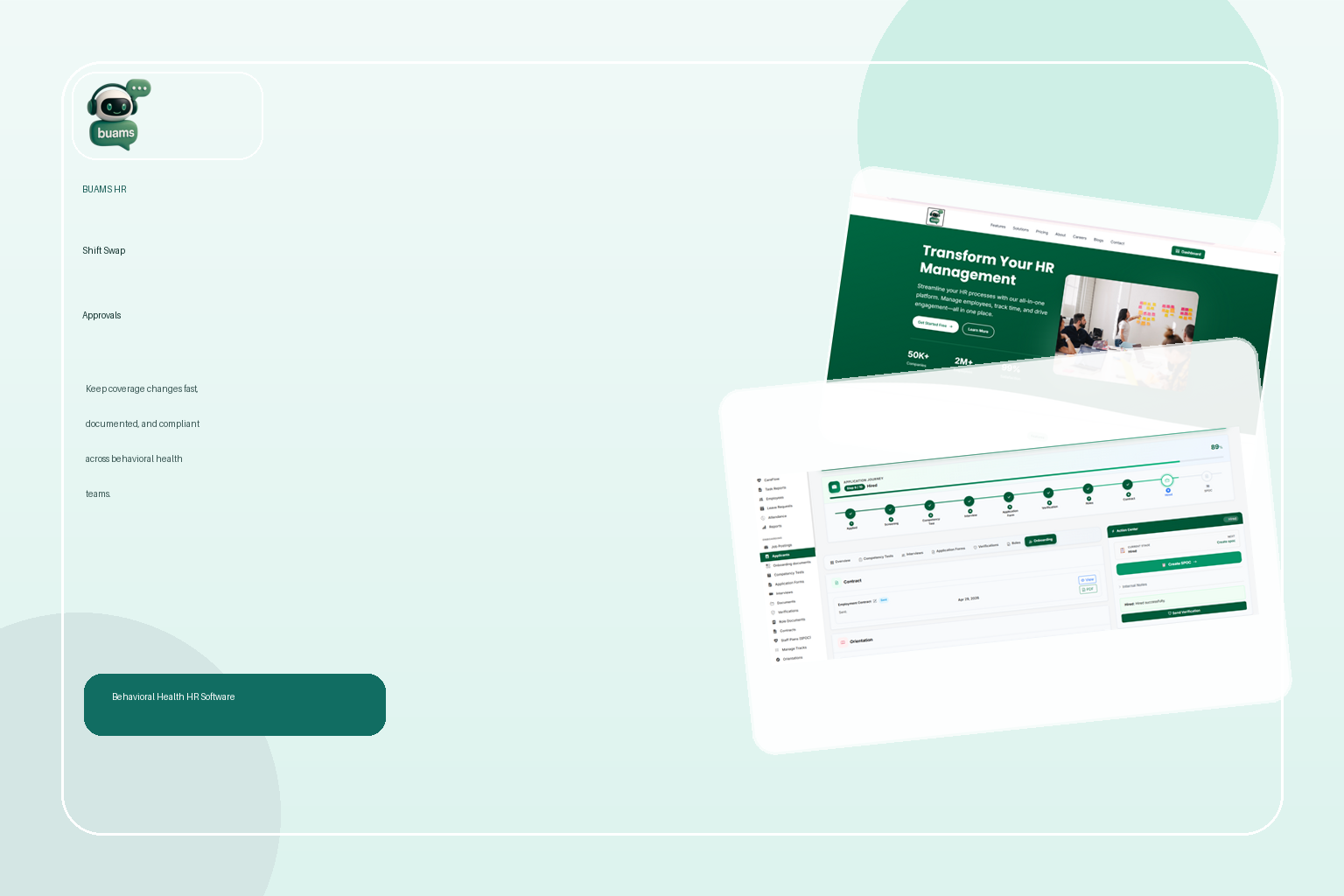
Behavioral health organizations cannot afford coverage gaps, rushed handoffs, or undocumented schedule changes. When clinicians, direct care staff, and support teams need to trade shifts, HR and operations leaders need a process that moves quickly without creating payroll errors, overtime surprises, or compliance risk. That is why many providers are looking for shift swap approval software that gives supervisors and HR a clear, traceable way to review requests, confirm qualifications, and keep workforce records current.
For agencies with multiple programs, varied licensure requirements, and a mix of full-time, part-time, and relief staff, manual shift swaps often live in texts, emails, sticky notes, or verbal approvals. The immediate problem may look operational, but the downstream impact often reaches HR: incorrect time records, missing documentation, staff working outside approved roles, and avoidable employee frustration. A stronger approval workflow helps organizations move faster while protecting accountability.
Key Takeaways
What Is Shift Swap Approval Software?
Shift swap approval software is a structured workflow for submitting, reviewing, approving, and recording schedule change requests between employees. Instead of treating a swap like an informal favor between coworkers, the organization captures the request in a consistent process that documents who asked for the change, who approved it, when it was approved, and what conditions were checked before the final decision.
In behavioral health settings, this matters because a schedule change is rarely just a schedule change. A swap can affect supervisor coverage, site staffing ratios, credential alignment, overtime exposure, orientation readiness, and payroll accuracy. If the process is disconnected from workforce records, teams may approve a practical-looking swap that creates a preventable compliance issue later.
Why Shift Swaps Become Risky in Behavioral Health
Many providers operate across outpatient programs, residential services, community-based teams, and crisis support environments. Staffing decisions happen quickly, often under pressure. When the swap process is informal, leaders lose visibility into whether the replacement employee is actually the right fit for the assignment.
Common problems include approving a swap for an employee whose training is incomplete, moving a staff member into a location where required documentation is not current, triggering unplanned overtime, or relying on text-message approvals that never make it into the employee record. Even when care coverage is saved in the moment, the administrative mess shows up later during payroll review, incident follow-up, internal audits, or accreditation preparation.
What to Look for in Shift Swap Approval Software
Structured request intake
The process should start with a consistent request that captures the original shift, the proposed replacement, the affected program or location, and the reason for the change. This creates a reliable starting point instead of forcing managers to reconstruct what happened after the fact.
Role and qualification checks
Not every employee can safely or compliantly cover every open shift. A strong workflow should make it easier to confirm that the replacement employee has the right role, orientation status, training completion, and active credentials for the assignment before the request is approved.
Overtime and hours visibility
A swap that looks simple can still create budget pressure or fatigue risk if it pushes the replacement employee into overtime or excessive consecutive hours. Approval teams should have enough visibility to catch that before the change is finalized.
Clear approval ownership
Behavioral health organizations often involve more than one decision-maker in schedule changes. A frontline supervisor may confirm coverage, while HR or operations may need visibility into policy exceptions, labor concerns, or employee status issues. Good software makes ownership clear so requests do not stall or disappear between inboxes.
Documented final outcome
Once approved, the result should be easy to retain and reference. That matters for payroll questions, attendance disputes, coaching conversations, and internal reviews. Teams should not have to search message threads to prove what was approved.
Best Practices for a Stronger Shift Swap Process
Create approval rules by role and program
A residential overnight swap may need different review logic than an outpatient administrative shift. Define which changes can be approved locally, which require additional oversight, and which should trigger a compliance or HR check. This keeps the workflow practical instead of forcing every request through the same bottleneck.
Connect schedule changes to employee records
If employee files, credentials, and training records live in separate places, managers spend too much time checking readiness manually. Linking the approval process to current employee information helps teams make better decisions under time pressure and reduces the chance of avoidable mistakes.
Use one source of truth for documentation
Organizations should decide where the final approved change lives and make that process consistent. A centralized record helps HR answer questions faster, support payroll reconciliation, and respond with confidence if leadership asks why a specific staffing decision was made.
Review exceptions and repeat patterns
If the same teams are constantly requesting emergency swaps, that is a signal worth investigating. The issue may be staffing levels, poor schedule visibility, burnout, onboarding delays, or uneven supervisor practices. Better approval data can expose patterns that deserve operational attention.
How BUAMS HR Helps Behavioral Health Providers
BUAMS HR helps behavioral health organizations create better workforce control around everyday administrative events that often become compliance risks when handled informally. While every provider has its own scheduling realities, the underlying need is the same: keep employee information organized, make approvals easier to support, and reduce manual follow-up when something changes quickly.
With BUAMS HR, teams can maintain centralized employee records, track training and compliance status, organize workforce documentation, and support cleaner review workflows across HR and operations. That makes it easier to confirm staff readiness, preserve documentation, and reduce the confusion that often follows schedule-related exceptions. Instead of chasing details across disconnected systems, leaders can work from a more reliable employee management foundation.
For growing organizations, this matters beyond one shift change. Stronger documentation habits improve audit readiness, supervisor coordination, payroll confidence, and employee trust in the process. When staff believe schedule changes are handled fairly and consistently, it reduces frustration and back-and-forth for everyone involved.
Final Thoughts
Shift swap approval software is not just about moving names on a calendar. For behavioral health providers, it is about protecting coverage while making sure the people filling critical shifts are appropriately cleared, properly documented, and approved through a process the organization can stand behind later. That balance matters when services are time-sensitive and workforce pressure is constant.
If your current process depends on texts, hallway conversations, or manual spreadsheet updates, it may be time to strengthen the workflow. A more structured approach can reduce delays, improve accountability, and help HR support operations without becoming the bottleneck. BUAMS HR gives behavioral health providers a stronger foundation for that work by keeping workforce records, compliance information, and documentation aligned.