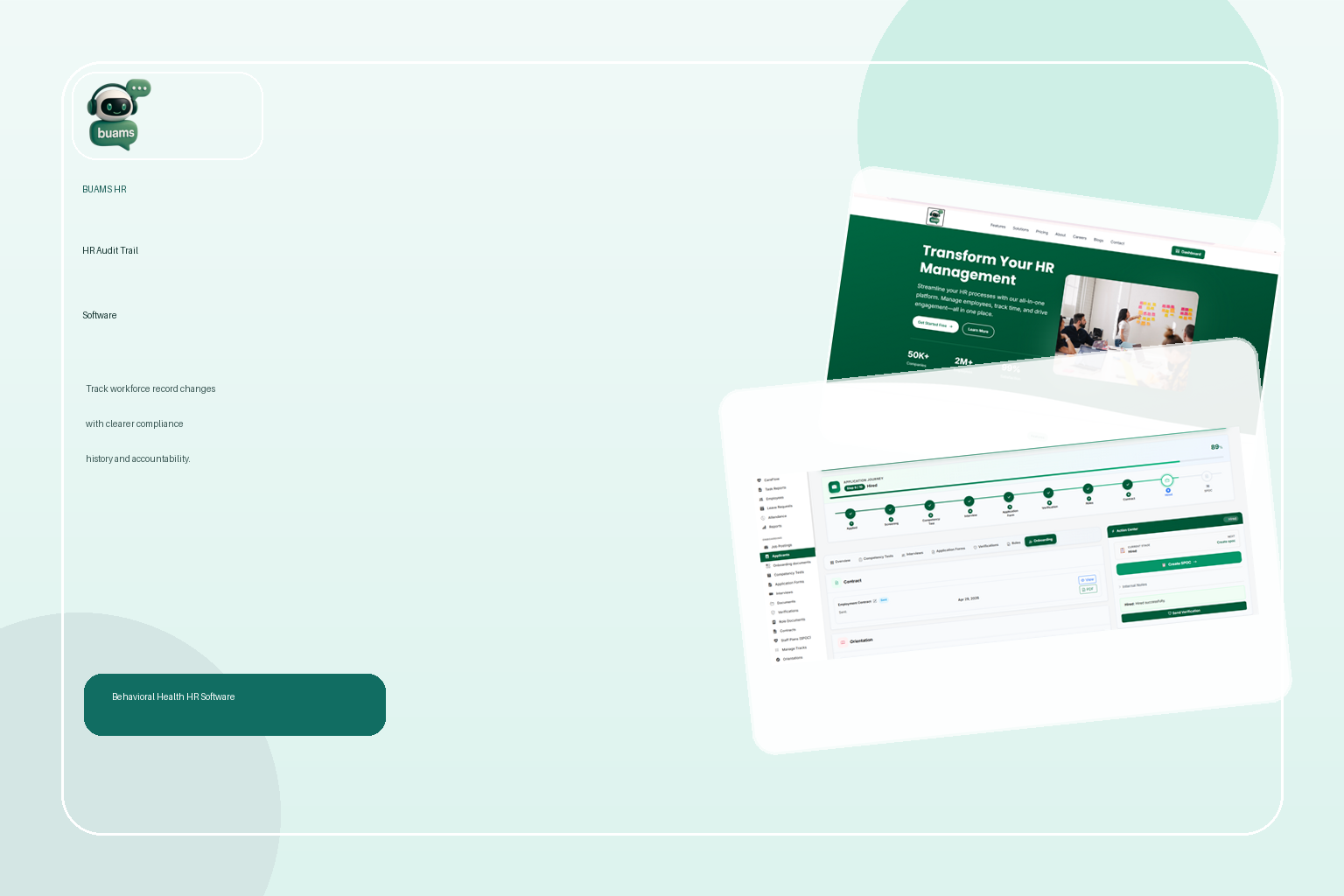
Behavioral health providers depend on accurate HR records, but accuracy is only half of the compliance story. Leaders also need to show who updated a file, when a requirement changed, and whether a document was reviewed before a staff member moved into a new role. That is why HR audit trail software matters. For growing providers, a reliable audit history reduces guesswork, shortens internal investigations, and gives compliance teams stronger evidence during reviews.
Key Takeaways
What Is HR Audit Trail Software?
HR audit trail software records the history behind important workforce actions. Instead of only showing the current version of an employee profile or compliance record, it preserves a timeline of edits, uploads, approvals, and status changes. In behavioral health settings, that can include changes to licenses, training completions, job titles, onboarding tasks, supervision records, and policy acknowledgments.
This matters because behavioral health organizations often operate across programs, sites, and funding requirements. A single employee file may be touched by recruiters, HR coordinators, compliance managers, supervisors, and executive leadership. Without an audit trail, teams can see the final state of a record but struggle to explain how it got there.
Why Audit Trails Matter in Behavioral Health HR
Behavioral health providers face frequent documentation pressure. Internal reviews, accreditation preparation, payer expectations, and state oversight can all create moments when HR teams need fast answers. If a record looks incomplete or a requirement appears overdue, the first question is usually not just whether something happened. It is when it happened, who handled it, and what changed along the way.
HR audit trail software helps answer those questions with less scrambling. A timestamped history can show that a missing document was replaced with a corrected version, that a supervisor completed a required review before a promotion, or that HR followed up on a pending license renewal before the due date passed. That visibility lowers risk and makes compliance work less dependent on memory or email chains.
Common Situations Where Providers Need Change History
Not every record update is high risk, but some HR moments carry more operational and compliance weight than others. Behavioral health providers usually benefit most from audit trail visibility in a few recurring scenarios.
What to Look for in HR Audit Trail Software
Not every system that stores employee data provides a useful audit trail. Some tools log activity in a way that is too technical, too incomplete, or too hard for HR teams to use during real workflows. Behavioral health organizations should look for audit trail capabilities that support day-to-day operations as well as formal review readiness.
Record-Level Visibility
Teams should be able to identify which employee record changed and which field, document, or status was affected. High-level activity logs are rarely enough when a reviewer needs proof tied to a specific staff member or requirement.
User and Timestamp Tracking
A strong audit trail should show who made the update and when it happened. This helps organizations separate system noise from meaningful actions and creates clearer accountability across HR, compliance, and management.
Workflow Context
The most useful audit trails connect changes to real HR processes such as onboarding, document review, credential maintenance, and approvals. Context matters because a long list of isolated edits is less helpful than a history that reflects actual work steps.
Easy Retrieval During Reviews
If teams need technical support every time they want to inspect record history, the audit trail will not help when time is tight. Look for reporting and search workflows that let HR staff retrieve evidence quickly during audits, leadership reviews, or incident follow-up.
Operational Benefits Beyond Compliance
While compliance is a major driver, HR audit trail software also improves routine operations. When teams can see record history clearly, they spend less time debating which version is correct or retracing work after a handoff. This is especially valuable in behavioral health organizations with lean HR teams or multiple programs sharing the same administrative staff.
Better audit history also supports manager trust. Supervisors can confirm that onboarding steps were completed, that required documents were reviewed, and that changes to employee information were not lost between departments. Over time, that reduces rework and helps teams move faster without becoming careless.
How BUAMS HR Helps
BUAMS HR helps behavioral health providers centralize employee files, compliance records, and workforce workflows in one system designed for real operational oversight. Instead of scattering updates across shared drives, email threads, and disconnected trackers, teams can maintain more consistent documentation in a single environment.
For organizations that need stronger accountability, BUAMS HR supports structured employee records, status visibility, and process consistency that make change tracking easier to manage. That can help HR leaders respond faster to questions about file updates, credential activity, onboarding progress, and workforce readiness across locations or programs.
Final Thoughts
Behavioral health organizations do not just need complete HR records. They need confidence in the history behind those records. HR audit trail software gives providers a clearer way to prove who changed what and when, which is essential for audits, internal oversight, and everyday workforce coordination. For teams trying to reduce uncertainty and strengthen compliance discipline, better change history is not a nice extra. It is part of running HR well.